


To treat onychomycosis at home, you will need to use special medications.Treatment is different in the early and late stages of the disease.Each of them can be identified by certain symptoms.The disease itself is called onychomycosis.It cannot be left unchecked, as the pathology takes a long time and is difficult to treat.The specific medication to treat onychomycosis is chosen based on the severity of your symptoms.
What is onychomycosis
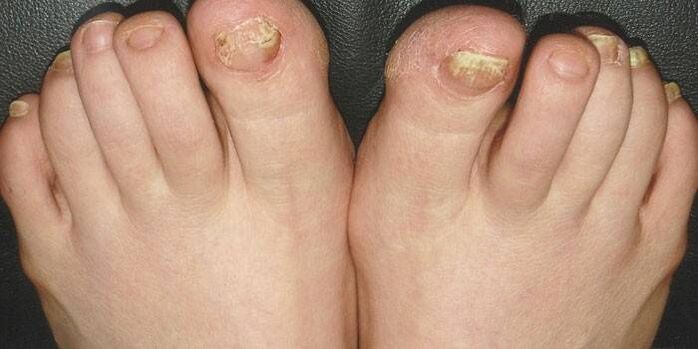
Onychomycosis is one of the most common infectious diseases caused by microorganisms in the form of yeast and mold.Due to their rapid spread, the nail plate begins to yellow, crack, crumble, and thicken.Your nails may completely fall off due to fungal growth.If left untreated, they will collapse.It is easy to get fungal infections in public places.This is especially true for saunas, swimming pools, beaches, nail salons and health clubs.
Where does it come from?
Most cases of infection occur through household items or shoes shared with sick people.People whose feet sweat excessively are more likely to develop onychomycosis.More commonly, foot fungus occurs in adults.In children, this occurs much less frequently.The causes of this disease are:
- wear tight shoes;
- sanitary conditions are not good enough;
- Endocrine and neurological diseases;
- weakened immune system;
- Poor blood circulation in the lower limbs;
- Frequently travel to areas with high humidity;
- Infectious chronic diseases;
- foot deformities;
- Vascular disease.
Types of toenail fungus
There are several types of fungi that can affect toenails.It is believed that there are mainly the following categories:
- Moldy.People who are frail from long-term illness are more likely to be affected.Nails appear blue, yellow, or green, and may even turn black.Onychomycosis can be completely removed in 1-2 months.
- yeast.Nails become uneven, grooved and wavy, and turn yellow or brown.As the disease progresses, the board lags behind the bed.At the same time, the nail folds can ulcerate and thicken.
- Dermatophytes.They appear as yellow spots on the nail plate.Keep the edges of your nails away from the bed.As the condition worsens, the nails turn completely yellow.
logo
The disease affects the big toe first.Over time, it can damage nails.When the fungus spreads, other fingers can be affected.The patient will experience severe itching between the two.The skin begins to peel and break.In addition, pathology manifests itself in the following symptoms:
- A change in the color of the nail plate.In its normal state, it is translucent and has a pinkish tint.After a fungal infection, the color of the nails can change to yellow, brown, or black.
- Thickening of the nail plate.It becomes thicker as it becomes more keratinized.In advanced cases, this can even interfere with treatment.
- Shaky.Without proper treatment, the nail plate can become damaged and become completely discolored.
stage
Symptoms of fungal infection vary depending on the stage of onychomycosis.The infection occurs quickly and the pathology is recognized by the following symptoms:
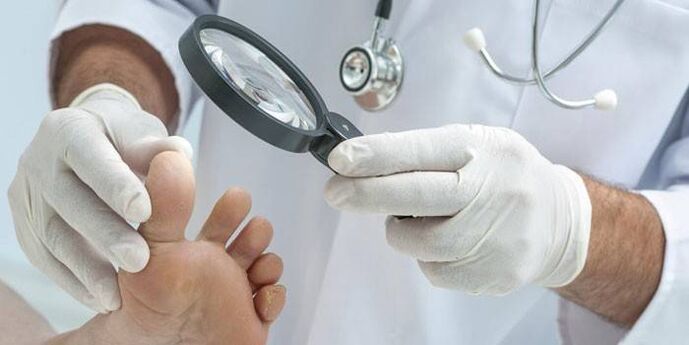
- Stage one.It is difficult to identify with the naked eye.This can only be done by a doctor who can see small pale spots under multiple magnifications.
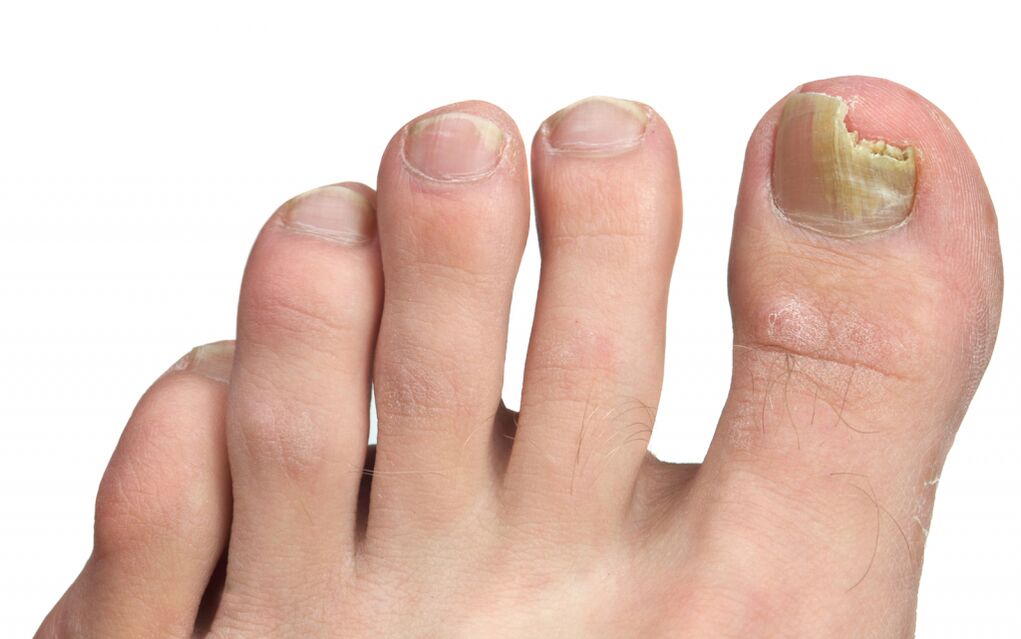
- The second stage.The pathology continues to progress.Small streaks and dots develop throughout the grooves.This can cause damage to the board.The nail plate loses its shine and begins to turn yellow.
- The third stage.If previous symptoms are ignored, your nails may fall off completely.The skin around it will become red and flaky.The nails completely fell off.Against this background there is a bad smell
How to Diagnose Fungus
External manifestations of the disease only confirm fungal infection of the toenails.The cause of the disease can only be determined through laboratory tests.In order to give appropriate treatment, onychomycosis is different from psoriasis, lichen planus, etc.If you have symptoms, you should consult a mycologist or dermatologist.The diagnostic method is as follows:
- Microsporidia.This is a scratch on the nail plate.To collect this material, the nails need to be treated with a special substance that destroys keratin.In this format, the material is easier to learn.
- Bacterial research.It involves placing materials into a nutrient medium.The pathogen of infection is determined by the growth rate, color, and shape of the colony.This study allows us to determine the susceptibility of microorganisms to drugs.
- DNA diagnostics.This method reveals areas affected only by dermatophytes and candida.Diagnosis is performed with special equipment and is therefore expensive.
How to Treat Onychomycosis
Depending on the clinical form of the disease, the size of the affected area, and the degree of changes in the nail, the doctor will prescribe a comprehensive treatment plan.Treatment may include:
- Ointments, creams, lotions, drops, sprays for shoe disinfection and treatment to help treat mild or moderate fungal infections;
- Tablets are taken when the disease progresses to a severe stage;
- Surgical removal of the nail plate due to severe or recurrent infection;
- Folk remedies such as soda, garlic, hydrogen peroxide, birch tar ointment, tea tree oil, tincture of celandine, propolis, acetic acid.
in initial stage
For small lesions, topical treatments will help cure onychomycosis.These include peel-off patches, varnishes, creams, gels and ointments.These drugs are only effective in the early stages of onychomycosis.They can be applied directly to damaged nails and surrounding tissue for extended periods of time.Sometimes full recovery takes about a year.
neglected fungi
If the disease has advanced to an advanced stage, topical treatments will have minimal effect.Internal medications are required.This includes antifungals in tablet and capsule form.They inhibit the development of pathogens and prevent their spread.Additionally, these pills last longer, thus reducing the chance of re-infection.
How to Treat Onychomycosis
Depending on the stage of the disease, doctors prescribe certain medications to patients.The main categories of antifungal drugs are:
-
Drugs used systemically;
- Products for topical use.
The final group of medications includes a variety of medications that are applied directly to the affected nail.The main ones are:
- varnish;
- spray;
- solution;
- cream
Special varnish
In the initial stages of the disease, antifungal varnish can be used.They help soften the nail plate and increase the concentration of medicinal substances in it.
Ointments and creams
The effectiveness of topical drugs is due to the direct contact of the drug with the lesion.Such drugs are prescribed only in the first stage of the disease, since tablets have more side effects.
antifungal tablets
If signs of toenail fungus indicate an advanced stage of the disease, your doctor may prescribe more serious antifungal medications in the form of pills.
laser treatment
If onychomycosis has progressed to an advanced stage and cannot be treated with medication, a more radical approach may be necessary.One of the effective methods is laser treatment.When exposed to radiation, fungal spores die.Additionally, the laser does not harm surrounding tissue.Even advanced forms of onychomycosis can be cured with 3-4 treatment procedures.
Treat toenail fungus with folk remedies
Folk remedies for treating toenail fungus should be used along with medications.This is especially true in the later stages of the disease.In this case, just using folk recipes will not help.At the first symptoms of onychomycosis, you can use vinegar, iodine, kombucha, and celandine tinctures.
vinegar
Apple cider vinegar is used to remove fungus.Must be mixed with warm water in a 1:1 ratio.You need to soak your feet in this solution for about 15-20 minutes.Afterwards, your feet should be allowed to dry completely.It is recommended to repeat the procedure every day for two weeks.During this time, you can notice how new nails that have not been damaged by the fungus begin to grow.
iodine
Toenail fungus can also be effectively treated with the help of iodine.The course of treatment is 3 weeks.The affected nail plate will need to be treated with iodine every day.It is important to continually remove the ingrown nail tips.This foot fungus treatment gets rave reviews.You can also take a hot bath with iodine.To do this, dissolve 10 drops of the product in 0.5 liters of water and soak your feet in it for 10 minutes.
kombucha
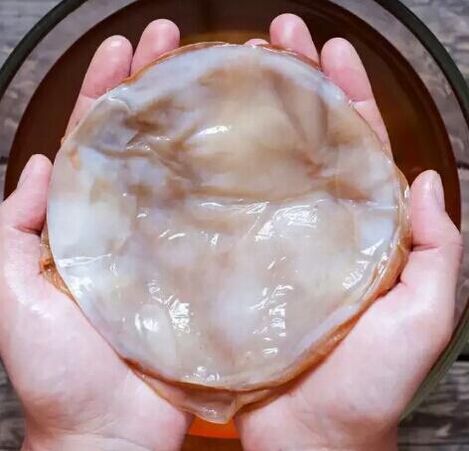
The compress is made with kombucha.To do this, it is necessary to apply a disk of this product to the sore nails and wrap them with cellophane and a bandage.You need to wear socks over it.It is best to perform this procedure at night and in the morning rinse the feet with warm water, then remove the affected area and lubricate it with iodine.Many patients report severe pain, but if you are patient, you can recover from the fungus quickly.
Celandine
Fresh celandine must be passed through a meat grinder and the juice is extracted from the resulting pulp using 3-4 layers of gauze.You need to take enough herbs to make 200ml of liquid.Add 200 ml of 70% alcohol and soak for a full day.After steaming your feet for 10 minutes and allowing them to dry completely, apply the prepared product to the affected area.The course of treatment is at least 10-12 days.Nail plates need to be treated 3-4 times a day.